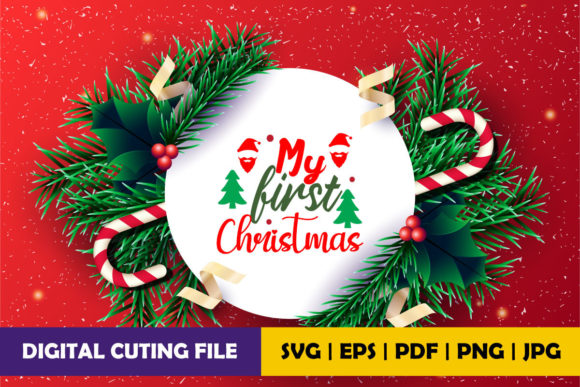
My First Christmas: A Designer's Review for Holiday Stitching
As we approach the holiday rush, the pressure to deliver unique, high-quality handmade products intensifies. For those of us running small shops or managing custom orders, selecting the right design assets is half the battle. I recently took a close look at the "My First Christmas" graphic from a popular digital store to see if it holds up under the needle. This isn't just about whether it looks cute on a screen; it is about how it translates into a finished product that a customer will cherish for years.
First Impressions and Visual Personality
When you first open the file, the charm of My First Christmas is immediate. It captures that specific, nostalgic mood associated with a baby's inaugural holiday season. The layout feels balanced, avoiding the clutter that often plagues seasonal designs. From a designer's perspective, the visual personality is soft yet distinct. It doesn't scream for attention with overly complex details, which is actually a strength. In the world of Crafts and Graphics, simplicity often wins when it comes to longevity. A design that is too busy can date quickly or look messy once stitched onto textured fabric. This particular piece seems to strike a sweet spot, offering enough character to be recognizable without overwhelming the garment it adorns.
The theme is universally appealing, making it a versatile choice for various embroidery projects. Whether you are aiming for a traditional red and green palette or a modern monochrome look, the core shapes appear robust enough to handle different color interpretations. This flexibility is crucial for Etsy sellers and boutique owners who need to offer customization options to their clients without redesigning the wheel every time.
Real-World Application: The Baby Onesie Scenario
To truly test the viability of this design, I imagined a real-life scenario: a custom order for a set of personalized baby onesies and a matching milestone blanket. This is a common request in November and December. When visualizing My First Christmas on a soft cotton onesie, the scale seems appropriate. It is large enough to be a focal point on the chest but not so massive that it restricts movement or covers the entire front of the garment.
For a sweatshirt embroidery project intended for a toddler, the design's lines appear thick enough to maintain clarity. One of my biggest concerns with digital files is how fine details survive the stitching process. If this design relies heavily on tiny running stitch outlines or minuscule text, it could vanish into the nap of a fleece hoodie. However, the structure suggests it would work well with a combination of satin stitch borders and solid fill stitch areas. This combination ensures durability, which is essential for items that will be washed repeatedly.
If you are creating a tote bag design for a parent carrying holiday gifts, this graphic adds a personal touch that elevates a standard canvas bag into a keepsake. The emotional value of a "first" anything is high, and customers are willing to pay a premium for a personalized gift that marks the occasion professionally.
Navigating Fabric Textures and Hoop Constraints
While the design shows promise, there are practical considerations every machine embroidery design user must address. Not all fabrics play nice with every embroidery file. If you plan to stitch My First Christmas on a textured towel or a waffle-knit blanket, you need to be wary of stitch density. High-density fills can cause the fabric to pucker or become stiff, ruining the drape of a baby blanket. It is always wise to test the design on scrap fabric that matches your final material.
Another critical factor is the hoop size. Before purchasing or downloading, verify the dimensions provided in the product description. If the design is larger than your standard 4x4 hoop, you might need to re-hoop or use a larger machine, which impacts your production workflow. For custom apparel like caps or curved surfaces, ensure the digitization accounts for push and pull factors. A design that looks flat on a monitor can distort significantly on a curved hat brim if not properly adjusted.
Dark fabrics present another challenge. If you are stitching this onto a navy blue velvet dress or a black sweatshirt, you must check the contrast. Does the design include an underlay or a background fill that prevents the dark fabric from showing through light thread colors? Without proper planning, a white snowflake element might look gray and muddy against a dark background. Testing a black and white mockup before cutting into expensive fabric can save you from costly mistakes.
Commercial Viability and Brand Consistency
For commercial embroidery professionals, the consistency of the output defines brand reputation. Using a reliable digital embroidery file like My First Christmas helps maintain a standard of quality across multiple orders. If the stitch count is optimized and the pathing is logical, you reduce thread breaks and machine downtime. This efficiency directly impacts your bottom line.
Furthermore, the aesthetic of this design fits well within current trends for nursery decor and holiday gifting. It appeals to the demographic looking for sentimental value rather than flashy graphics. By incorporating this into your small shop product lineup, you can create cohesive collections—matching bibs, burp cloths, and wall hangings that tell a story. This kind of thematic consistency builds customer trust and encourages repeat business.
However, always review the licensing terms. The product description mentions these files are for yourself, friends, family, or supporters of special occasions. If you intend to sell finished physical items like embroidered shirts or patches, you must confirm that the license permits commercial use of the finished product. Never assume a digital download includes unlimited commercial rights unless explicitly stated.
Final Verdict for Makers and Designers
In conclusion, My First Christmas appears to be a strong contender for your holiday catalog. Its strength lies in its emotional resonance and adaptable layout. It is suitable for a wide range of applications, from delicate baby embroidery to sturdy embroidered patch creations. However, success depends on your preparation. Check the stitch density against your chosen fabric, select high-quality thread colors that pop, and use the correct stabilizer to prevent shifting.
Whether you are a hobbyist making gifts for family or an entrepreneur scaling up for the season, this design offers a solid foundation. Just remember to validate the technical specs—file formats, exact sizes, and machine compatibility—before committing to a large run. With the right setup, this graphic can help you create beautiful, memorable items that capture the magic of a child's first holiday.