Reviewing Dear Santa Define Nice for Holiday Stitching
As an embroidery designer who has spent countless hours digitizing, stitching, and critiquing designs for real-world application, I approach every new file with a critical eye. It is not enough for a design to look cute on a screen; it must hold up under the needle, survive the wash, and appeal to the end customer. Recently, I evaluated Dear Santa Define Nice, a digital graphic asset that has been generating buzz among crafters and small business owners. This review breaks down how this design performs when translated from a digital concept into a tangible, stitched reality.
First Impressions: Mood and Visual Personality
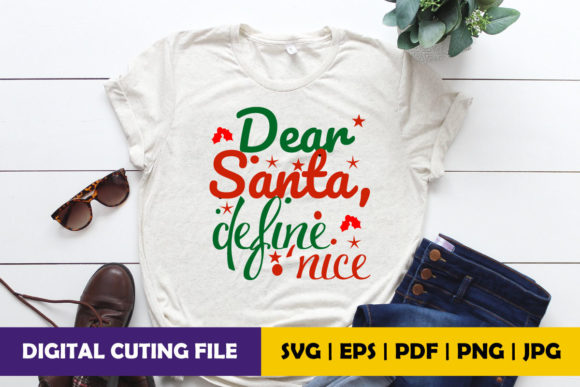
The first thing that strikes you about Dear Santa Define Nice is its playful yet structured aesthetic. The phrase itself invokes a classic holiday trope, but the execution determines whether it feels cliché or fresh. In this case, the layout suggests a balance between whimsical charm and clean readability. For embroidery, this is crucial. Overly complex scripts can turn into thread nests, while blocky fonts can feel stiff. This design appears to strike a middle ground, offering a personality that fits well within the Crafts and Graphics categories without being overly dense.
The visual mood is undeniably festive but restrained. It does not scream for attention with excessive ornamentation, which makes it versatile. When I visualize this on a product, I see it working best as a focal point rather than a background element. The "define" aspect of the text implies a dictionary-style or explanatory layout, which often translates well to embroidery because it relies on clear lines and distinct letterforms. This clarity is essential for maintaining stitch integrity, especially when working with smaller hoop sizes or textured fabrics.
Real-World Application: From Screen to Stitch
To truly test the viability of Dear Santa Define Nice, I considered several common project scenarios. Let’s imagine you are preparing a custom order for a boutique client who wants personalized holiday gifts. Here is how the design holds up across different mediums.
- Sweatshirt Embroidery: This is perhaps the strongest use case. The design’s likely moderate density would sit well on fleece or cotton blends. A sweatshirt provides enough stability to support the text without excessive puckering, assuming proper stabilizer is used. The contrast of white or cream thread against a deep red or forest green garment would make the message pop, creating a high-value handmade product that customers love.
- Tote Bag Design: Canvas totes are staples for Etsy sellers. However, canvas has a loose weave. If Dear Santa Define Nice contains fine details or thin running stitches, they might get lost in the fabric texture. I would recommend using a cut-away stabilizer and potentially increasing the stitch count slightly if you have the ability to edit the embroidery file. Alternatively, using a satin stitch border around the text could help define the edges against the rougher material.
- Baby Embroidery: For baby items like onesies or burp cloths, softness is paramount. If this design is intended as an applique design, it would be ideal. Applique reduces the amount of thread directly on the baby’s skin, making it softer and more durable. If it is a full-stitch design, ensure the stitch density is not too high, as dense stitching can make the fabric stiff and uncomfortable for sensitive skin.
Technical Considerations for the Embroiderer
While the aesthetic appeal is strong, the technical execution is where many designers stumble. When working with Dear Santa Define Nice, there are specific factors to monitor to ensure a professional finished product.
Fabric Texture and Stability: Textured fabrics like terry cloth or waffle knit can obscure small details. If the design includes tiny serifs or intricate connections between letters, these may not stitch out cleanly on such surfaces. I always advise testing the design on scrap fabric first. This allows you to check thread tension and see if any elements pull or distort. For stretchy fabrics like jersey knits, a lightweight cut-away stabilizer is non-negotiable to prevent the design from warping after washing.
Thread Color Contrast: The legibility of this design depends heavily on color choice. Since the theme is holiday-related, traditional reds, greens, and golds come to mind. However, consider the value contrast. A dark red thread on a black shirt will vanish. Use a printable mockup or digital preview to test different thread colors before committing to the machine. High contrast ensures the message is read instantly, which is vital for giftability and buyer engagement.
Hoop Size and Placement: Confirm the recommended hoop size before purchasing or downloading. If the design is wide, it may require a 5x7 or larger hoop. Placing a wide design on a curved surface, such as a cap, requires careful centering and possibly a specialized cap frame. Misalignment on caps is a common error that ruins the professional look of custom apparel. Always measure twice and hoop once.
Commercial Viability for Small Shops
For craft business owners and small shop product creators, the commercial potential of Dear Santa Define Nice is significant. Holiday embroidery is a peak season for sales, and designs that are recognizable yet unique perform well. This design fits into the niche of holiday embroidery without being overly specific to a single year, meaning it can be reused in your inventory for multiple seasons.
However, licensing is a critical component of commercial embroidery. The product description mentions it is a digital file for personal and potentially commercial use, but you must verify the specific license terms provided by the creator. Can you sell finished items? Can you use it in mass production? Never assume. Clarifying these rights protects your business and ensures you are respecting the intellectual property of the design assets you purchase.
Moreover, the perceived value of the item increases with the quality of the stitch-out. A clean, well-digitized version of Dear Santa Define Nice signals professionalism. It builds customer trust and encourages repeat business. If you are selling on platforms like Etsy, high-quality photos of the stitched item—showing close-ups of the satin stitch or fill stitch quality—will significantly boost conversion rates.
Final Verdict and Designer Notes
In conclusion, Dear Santa Define Nice offers a charming and versatile option for holiday projects. Its strength lies in its balanced layout and festive theme, which appeals to a broad audience. However, its success in real-life applications depends on the embroiderer’s attention to detail.
- Test First: Always stitch a sample on similar fabric to check for registration issues.
- Check Density: Ensure the stitch count is appropriate for the garment weight.
- Verify License: Confirm commercial rights before selling finished goods.
- Contrast Matters: Choose thread colors that stand out against the fabric background.
Whether you are creating a personalized gift for family or stocking your online store with seasonal merchandise, this design has the potential to shine. By treating it with the technical respect it deserves—considering stabilizer, fabric, and thread choices—you can transform a simple digital file into a cherished keepsake. For those looking to expand their library of reliable machine embroidery design options, Dear Santa Define Nice is a worthy contender, provided you approach it with a planner’s mindset and a crafter’s heart.